
Live, Work and Play Sustainably
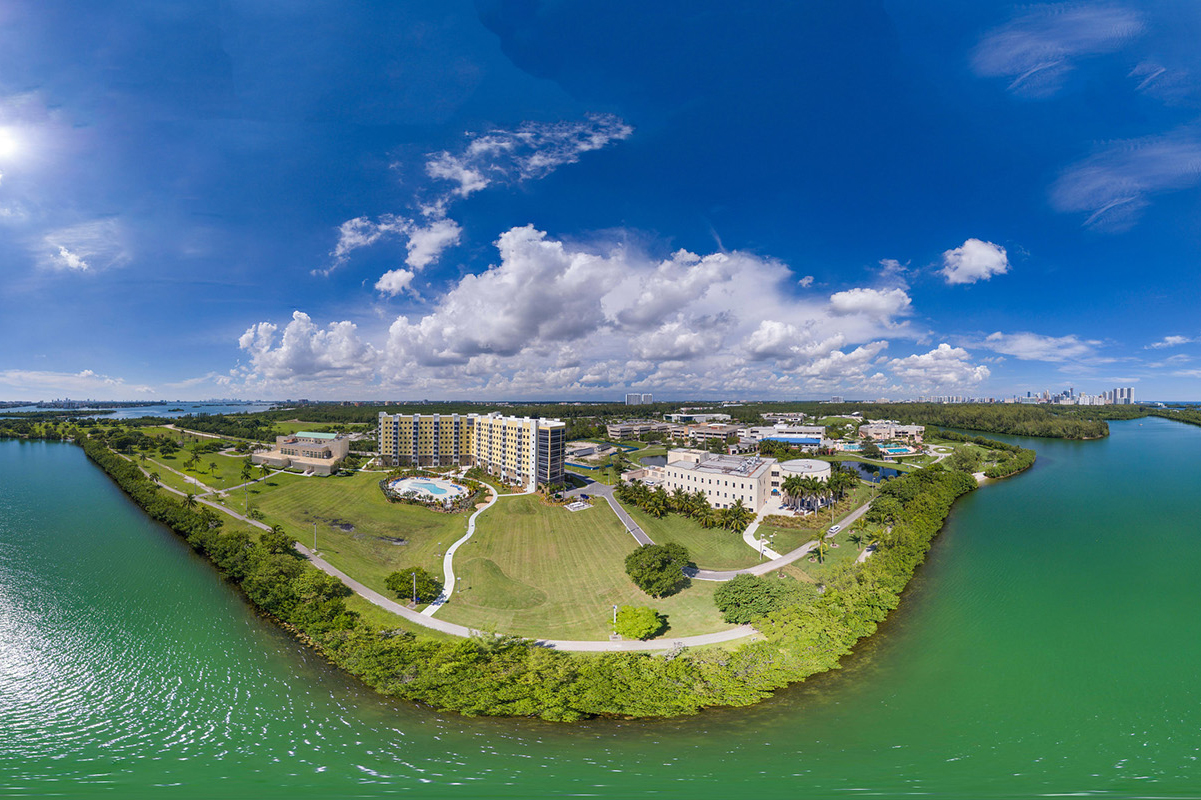
Florida International University is a global leader in research and advocacy for LIFE BELOW WATER. With a campus located along Miami’s ecologically and economically essential Biscayne Bay, we recognize the need for living and working sustainably on campus as a university community.
Planning for a Sustainable Future
Florida International University has a deep responsibility to be good stewards of our resources: human, economic, and environmental. In the FIU 2030 Strategic Plan, we continue to strengthen our commitment to ensuring a sustainable future for our institution and the South Florida community. This includes sound strategies and university policies to protect, preserve and enhance our aquatic ecosystems.

Sustainable Seafood at FIU
FIU's purchasing decisions are guided by Chartwells, highlighting our commitment to animal welfare, sustainable seafood, and biodiversity. Among its many sustainability initiatives, Chartwells is Seafood Watch-certified and maintains a purchasing policy to acquire seafood from sustainable sources. According to the most recent sustainability scorecard, at least 98 percent of all seafood served by Chartwells came from confirmed sustainable sources.
Environmental Regulations
Florida International University maintains a policy to reduce pollution of all kinds. The university also requires all employees to comply with all federal, state and local laws and regulations including those pertaining to water quality standards, prevention of marine pollution and the prevention of altering aquatic ecosystems. The following policies pertain to preventing and reducing marine pollution of all kinds, especially in relation to land-based activities:
- U.S. Clean Water Act
- Marine Protection, Research and Sanctuaries Act
- Marine Debris Act
- Coastal Zone Management Act
- U.S. Environmental Protection Agency
- Florida Department of Environmental Protection
- Florida Water Conservation Act
- Miami-Dade County Environmental Resources Management
- FIU Environmental Health and Safety Policy
FIU's Department of Environmental Health and Safety is charged with ensuring university compliance with regulations, statutes, guidance and best management practices for environmental protection. The university’s current Environmental Management Policy was first implemented in 2006 and most recently updated in 2021.
The university community is also responsible for ensuring outside vendors and contractors uphold FIU’s environmental standards.
Water Quality Management
FIU maintains a zero tolerance policy for illicit discharge within the university. Our commitment is to prevent pollution of all kinds including marine pollution, whether working on campus, in the community, on the water or in the water.
FIU's Biscayne Bay Campus is located along Biscayne Bay and in close proximity to Oleta River. The bay and all natural waterways tidally connected to the bay have been designated as the Biscayne Bay Aquatic Preserve, a Miami-Dade County preserve and managed by the Florida Department of Environmental Protection.
FIU Environmental Health and Safety
Hazardous Waste Management
Researchers, lab managers and supporting lab staff are provided training to maintain a safe work environment that protects people and the environment. A team of skilled professionals from FIU’s Department of Environmental Health and Safety provide guidance and oversight on the proper disposal of hazardous materials, research proposal safety reviews, hazard assessments, lab equipment certifications, development of specific laboratory safety programs, new lab walkthroughs/consultations and special hazard materials/equipment approvals.
FIU Hazardous Waste Management Plan
Plastic Waste Reduction
FIU's Panther Dining maintains high sustainability standards including a policy to reduce single-use plastics and use of to-go containers made of recycled PET or fully recyclable materials. The university’s Plastics Reduction Taskforce worked with all campus food vendors to remove plastic straws, cup lids, and bags from the dining counters, only making them available upon request. This “Plastics If You Ask” initiative is the first step along a strategic pathway towards a plastic-free campus.
In addition, many campus drinking fountains have been updated with modern drinking stations that include a spout for filling reusable water bottles. These stations provide real-time data on a digital screen about the amount of plastic waste prevented with each fill-up and a sticker on the side detailing the energy and water efficiency of the fountains. So in addition to hydration, our efforts are also focused on reducing the use of single-use plastics on campus and improving overall efficiency.
Stormwater strategies for Watershed Management
FIU has implemented strategies to manage stormwater runoff for effective watershed management which include education for employees and students, well-managed waste disposal programs, an easy-to-use system for reporting violations, and more.
Stormwater Management strategy
Effective stormwater management is critical for both environmental protection and campus infrastructure. FIU actively works to manage and reduce its impact through policies and management.
Learn more about stormwater management:
- Vehicle Maintenance - Guidance on how vehicle owners and businesses can help reduce stormwater pollution through proper maintenance, spill prevention, and environmentally responsible practices.
- Stormwater basics – Learn about how stormwater affects our water supply and what you can do to help.
- Stormwater basics for businesses and restaurants – Here’s what business owners and restaurant operators need to know about stormwater management.
- Illicit discharges – FIU has a zero-tolerance policy for illicit discharges. Learn how to dispose of waste water properly
- Report a Problem with Stormwater – Report a problem, submit an idea or recommend a change to improve how we manage stormwater
- Environmental Management Policy - FIU's policy on managing and protecting environmental resources
Did you know?
FIU graduation caps and gowns are made of 100 percent recycled material including recycled plastic bottles, helping to keep single-use plastics out of our oceans.
Biscayne Bay
With a campus located along Biscayne Bay, we do more than just implement best practices to minimize impacts on our environment. At FIU, we lead initiatives to protect the bay, and our scientists are collaborating with community and government partners to improve the resilience and sustainability of the bay.
Florida Keys and the Caribbean
FIU Aquarius includes a land-base facility in Islamorada, Florida and the world's only underwater research laboratory, which is located in the Florida Keys National Marine Sanctuary. In addition to our efforts to protect the local environment where we work, our scientists are actively involved in ecosystem restoration, and FIU is the main research partner for the federal sanctuary.
Learn more about our efforts for the Florida Keys and the Caribbean